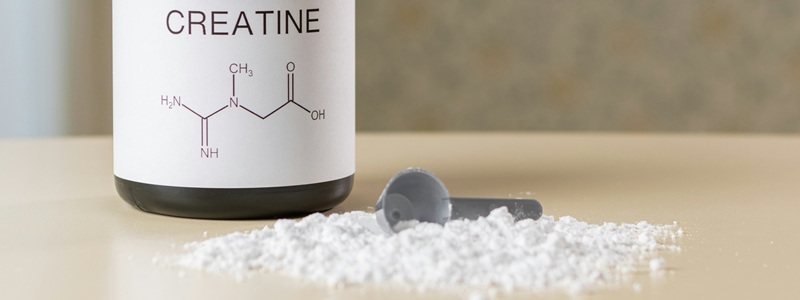

Creatine is what men use to bulk up their muscles, right?
It is also stellar for women in their wisdom years in so many ways!
What is Creatine?
Creatine is a chain of amino acids, but not protein. It is made in humans in small amounts in the liver and kidneys.
Normal metabolic processes consume from 1 to 3 grams of creatine a day, which needs to be replenished.
Generally, about half of that can come from eating red meat and seafood, and the body can make the rest.
However, for women in their wisdom years, as creatine is related to estrogen, and as estrogen is lower, creatine is lower as well.
Is Creatine Supplementation Safe?
Creatine is safe and well-tolerated by most people. A meta-analysis of women taking creatine showed no adverse effects.
Studies show that short and long-term supplementation (up to 30 g/day for 5 years) is safe and well-tolerated in healthy people as well as certain others with illness, including the elderly.
Many studies together show that creatine improves exercise performance as well as preventing and/or reducing the severity of injury, enhancing rehabilitation from injuries, and helping athletes tolerate heavy training loads.
Weight gain can be associated with creatine supplementation. Some may be due to the increase in muscle mass. Some may be due to an increase in body water content due to the chemical structure of supplement.
How can women use Creatine?
Numerous studies suggest that creatine may be critical in slowing bone and muscle decline in older adults and providing neuroprotective effects.
While resistance training improves musculoskeletal health during aging, the combination of creatine supplementation and exercise leads to greater physiological benefits, specifically in older adults.
Furthermore, creatine supplementation promotes muscle recovery after exercise training.
In a double-blind placebo-controlled crossover study, creatine dosed at 5 grams a day for six weeks was shown to help cognitive ability in young adults.
Creatine may positively impact the health of blood vessels as an antioxidant, helping nitric oxide (NO) bioavailability, and maintaining the blood vessel lining.
The impact of creatine on sleep in was studied with females doing a whole-body resistance training with supplemental 5 grams of creatine or a placebo daily. They trained twice a week for a total of 35–45 minutes per session. Creatine improved sleep on workout days with the women sleeping nearly 50 minutes longer, but not non-workout days.
A study shows that when creatine is taken before sleep deprivation, it improves cognitive performance, enhances brain energy levels, and reduces fatigue the next day.
How do I use Creatine?
Experts seem to agree that as creatine monohydrate is what is used in studies, other forms are not only not studied much but also it is not necessary to improve on creatine monohydrate since it performs so well.
Research indicates that creatine monohydrate supplementation with a loading phase of 5 grams (or approximately 0.3 grams per kilogram of body weight) of creatine taken approximately four times daily for five to seven days increases creatine stores in muscle tissue by 20 to 40 percent, with continued supplementation of 3 to 5 grams per day required to maintain elevated levels.
In a podcast with Dr. Mindy Pelz, “Strong is Ageless” Dr. Vonda Wright told her “I take 10 grams of creatine a day. Five, is what we started with. And then that paper recently came out with Alzheimer’s cognitive function with 20. So I’m like, Okay, I’ll just up it to 10. Yeah? So 10 of creatine. Really good, really good research with muscle and brain.”
As everybody is different, and research with women is still underway, this is NOT meant to be a recommendation. If you want to play with creatine supplementation, it appears to be safe and can provide many, many benefits.
Where can I learn more?
Dr. Rhonda Patrick explores the science of stress resilience, disease prevention, and living a more fulfilled life at Found My Fitness.
The published paper, International Society of Sports Nutrition position stand: safety and efficacy of creatine supplementation in exercise, sport, and medicine can be accessed for free online here.
Dr. Mindy Pelz’s book Age Like A Girl, promising information on creatine amongst so much more, can be ordered here.