
The FDA warns of an emerging health threat available in convenience stores and at gas station checkouts. This is no joke!
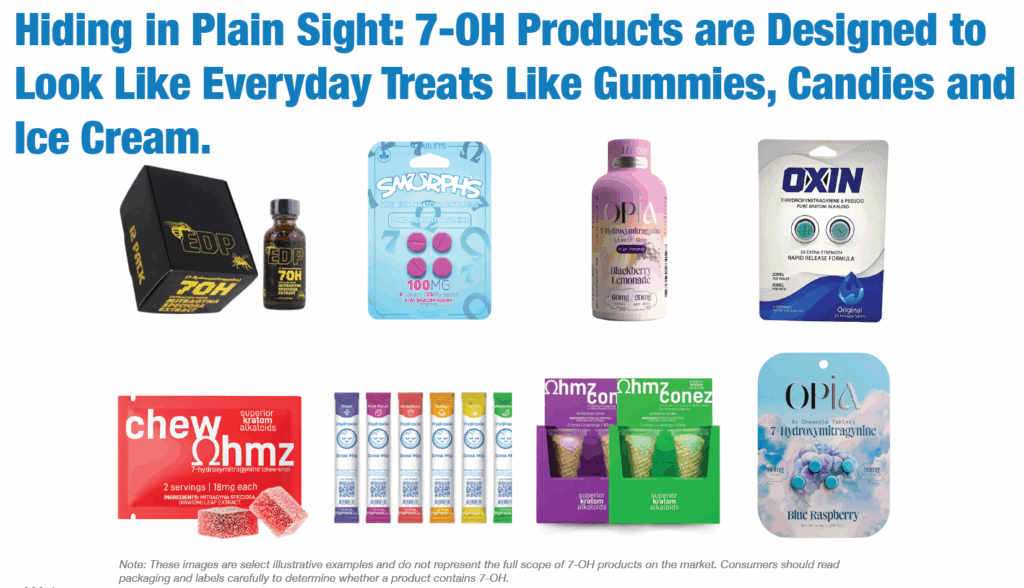
It’s a synthetic opioid marketed in products for energy, mood or pain, often in bright packages that look like candy, gummies, juice, or even ice cream.
What is this dangerous substance?
The synthetic opioid known as 7-OH is derived from a plant named Kratom and is designed to be addictive. It is not yet designated as a controlled substance, so it can freely be used in products.
Based on demonstrated pharmacology, repeated or prolonged use of 7-OH leads to tolerance, physical dependence, and potentially to opioid addiction
7-OH (formally known as 7-Hydroxymitragynine) is a powerful psychoactive compound that occurs naturally in very small amounts in the Kratom plant.
7-OH products are concentrated derivatives often falsely marketed as Kratom.
Street names include 7-Hydroxy, 7-OHMG and ‘7’.
7-OH is 13x more potent than morphine.
It is NOT the plant Kratom but may be found in high concentrations in “Enhanced” or “Spiked” Kratom products which contain as much as 500% more 7-OH than would be expected naturally in the plant.
Compared to synthetic 7-OH products, fresh kratom has markedly lower levels of psychoactive substances. Still, its effects vary widely between individuals and products.
Reports to Poison Control
People using this psychoactive compound 7-OH have sought help from Poison Control, experiencing dependency, withdrawal, overdose and even death.
Symptoms of 7-OH poisoning include seizures, gastrointestinal distress, liver injury, depression, anxiety, and insomnia.
Withdrawal symptoms include cold sweats, irritability, body aches, and restlessness.
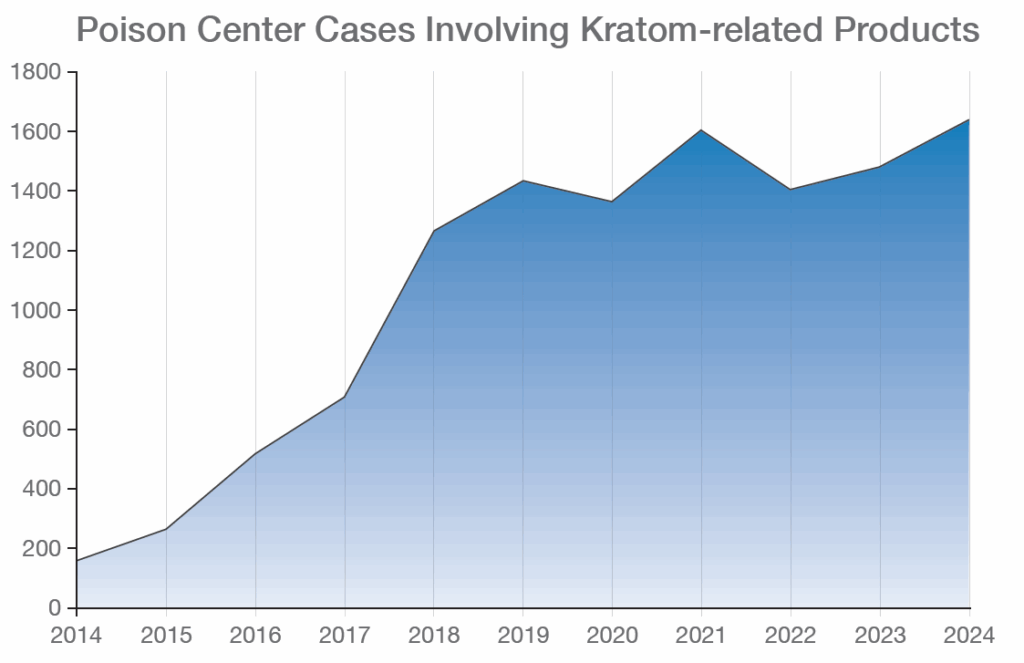
Poison Control Reports have skyrocketed in the last 10 years.
Someone you know using?
Coming off 7-OH can be challenging, and it is best to work with a Natural Health Care Professional experienced in opioid withdrawal. A professional will help come up with a withdrawal plan, monitor symptoms, and adjust the approach when needed.
This is especially important if using 7-OH daily or at higher doses.
All opioids must be tapered off while managing acute symptoms such as muscle pain, nausea, insomnia, and anxiety and persistent symptoms like fatigue, mood swings, and poor concentration.
Management should not include other stimulants and sedatives such as caffeine and alcohol.
Resources like Refine Recovery can help.
Quick tips can be found at QuickMD.
While the plant Kratom has been used traditionally for centuries, modern concentrated 7-OH products are fundamentally a different substance and their habitual must be treated as an opioid addiction.