
How can movement be nutritious?
This is a term coined by Katy Bowman, physiologist and inspiration and mentor to my understanding of some of the physical and social aspects of health.
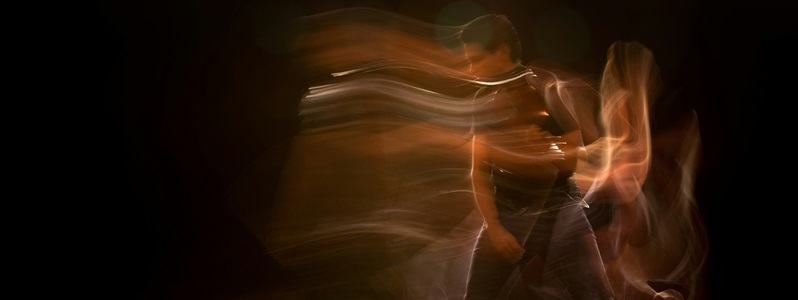
Movement can be nutritious because on the cellular level movement has an effect on our body similar to food.
When we move, tissues push and pull and in so doing put pressures on cells which convert it to chemical signals which can be thought of as nutrients.
Cells need a certain amount of movement to maintain our muscles, bones, and soft tissues to stay healthy.
How much nutritious movement are you giving your cells? Or . . .
Are you movement deficient?
It is possible. And ubiquitous.
As with food, there are specific symptoms when we have a deficiency which are reversed when that nutritious movement is replenished.
We are just starting to appreciate the wide-ranging effects of movement deficiency. It must contribute so much to chronic disease.
Like the macronutrients protein, fats and carbs, the movement macros are cardio, strength, and flexibility training. Like micronutrients and vitamins, physical therapists use isolated micro-movements to improve certain functions.
Sitting is a habit
Living in a world of ultra-processed food goes along with being sedentary with a lack of movement. In our society, sitting still is the program our bodies have adapted to, and sitting is the most practiced movement.
Sitting in the car to get somewhere. Sitting at your desk working. Sitting at a meeting. Sitting to eat. Sitting on the couch to enjoy a movie. Sitting scrolling or talking on your phone. Sitting on the toilet. Sitting in one chair after another.
Maybe going to the gym for an hour three times a week? What percentage of the hours of your week is that? Even if it is daily?
When we start to move again
Movement-rich tasks can feel as weird as kale and hemp seeds when you are not accustomed to them.
Squatting, sprinting, hanging, jumping, digging, gathering, carrying, plus sitting and lying on hard ground are varieties of movement our not-so-distant ancestors engaged in every day.
The good news is that our bodies can withstand all the movements required of our ancestors for survival. When we do them today, we create a body that is capable of continuing to do them tomorrow.
Our goal here is to see where movement used to fit into everyday activities and how it can also fit in our lives now.
Where will I find the time?
As you exclaim, “I don’t have extra hours to spend moving!” the truth comes out. Our ancestors did not separate out exercise/movement time from their other activities.
As they were living a natural life, as in Nature, many categories of needs were being meet through a very few tasks.
A whole family’s needs can be met with tasks that meet multiple needs at one time so that the focus is on fewer tasks while accomplishing more.
Katy Bowman calls that “stacking.” Oddly enough, that fits today’s standards so you will be able to do more in less time!
Stacking life activities
When stacking your life, you design your tasks to meet more than one category of need at one time. No need to skip the things you know you should do but can’t seem to find the time!
You can include work, play, food, movement, rest, family, community, learning, and nature in so many different combinations.
Imagine an evening in which adults and kids get together for a meal eaten outside in nature with some play time and a post-meal walk. That stacks 6 at once!
Moving out of being sedentary
If we are to cultivate a dynamic culture instead of a sedentary one, we must be aware of something important.
Nutritious movement goes against the grain; it is counterculture.
You must be willing to create your own dynamic world, even against your innate tendency to conserve energy as well as the disapproval of those around you.
What we accept in our society are cultural practices that prize sitting still along with the physical space infrastructure that promotes doing all you can without moving. Push a button, swipe up, tap here, and dinner is delivered to your doorstep without getting off the couch.
To run counter to culture, not only do we have to face resistance from those around us, we need to face our own resistance.
The key is to start with the opportunities that most resonate with you and do it a little at a time. Small shifts do add up, and over time get easier, which in turn makes it easier for those around you to move and change their attitudes as well in the ripple effect.
Ready? Whether ready or not . . .
Where will you begin Nutritious Movement?
There are certain broad environments in which movement can take place, and each can give us insights into where we can add nutritious movement while accomplishing other categories of need.
Broad categories are: Cooking, clothing, the home, work or learning (whichever is your job), activities, celebrations.
By showing a few details from two of these, you may start to get the idea. A photograph-rich guide to Nutritious Movement is Katy Bowman’s book “Grow Wild.” Consult it for more details and modeling what you can do.
Clothing is the container of you
Consider clothing and shoes.
I used to decide whether anything could stay in my wardrobe by testing out if I could do Tai Chi in it. Skirt wide enough and not too long? Pants stretchy enough to get down to Needle Under the Sea? Jacket loose enough to stretch my arm behind me? Check, check, check.
I think life is too short to wear uncomfortable clothing. Beyond that, we need to be able to move in our clothes. For our health.
For you, I would suggest these series of questions to know what to wear and what to throw out:
- Can you reach overhead comfortably in that shirt or jacket?
- Can you bring your knee to your chest or stretch a leg out to the side in those pants?
- Can you squat?
- How will the outfit shape your interaction with the environment? Are you afraid to do certain things?
- Do your shoes help or hinder?
- Can you walk an entire mile inside this whole outfit?
- Do the fibers of the clothing allow you to sweat and breathe through them?
How do your clothes stack up? What might you get instead?
Home environment
Katy asks us to think of our homes like greenhouses.
We want to keep certain elements in and others out.
While giving us comfort, we have inadvertently blocked out direct contact with nature and movement in it in our modern day homes.
Our ancestors used their homes as a place to rest after a day outside. In contrast, we often spend all day inside, because it apparently provides for all our needs. But does it?
On our way to nutritious movement, we can bring more outside elements inside and indoor elements outside.
- We can eat and perhaps also cook outside.
- We can bring hanging bars or climbing walls inside.
- Or station our desk facing a window so that we can look to the distance to give our eyes a break and slow the development of nearsightedness.
- We can bring sleeping under the stars inside by sleeping on sheepskins or thin mats which massage our bodies all night with our weight.
- Not to mention, sleeping without a pillow so that the neck stretches all night, resulting in a flexible body in the morning. (Something you need to move into gradually if you are used to being propped up by a pillow)
Another biggie is if we need to sit to do work, how do we sit?
We can arrange a desk so we can sit on the floor(!) so that we can alternate
- being cross-legged,
- legs folded to the right or left,
- legs straight out in front,
- kneeling with one or both legs tucked underneath.
- Or even squatting for a time.
Plus we can do the same for eating at a low table.
Plus . . . what else comes to mind?
Start to re-think all your furniture in favor of spending time on the floor.
What is your first move?
What has inspired you to more nutritious movement? What is your first step?
Be sure to consult “Grow Wild” by Katy Bowman for more depth to these ideas and demonstrations of what you can do.